Buy watchnudefree.eu ?
We are moving the project
watchnudefree.eu .
Are you interested in purchasing the domain
watchnudefree.eu ?
domain@kv-gmbh.de · 0541-91531010
Buy watchnudefree.eu ?
What are peptide bonds?
Peptide bonds are covalent bonds that link amino acids together in a protein chain. They are formed through a condensation reaction between the carboxyl group of one amino acid and the amino group of another amino acid, resulting in the release of a water molecule. Peptide bonds are crucial for maintaining the structure and function of proteins, as they determine the sequence of amino acids in a protein chain. **
What is correct: peptide bond?
A peptide bond is a covalent bond that forms between the carboxyl group of one amino acid and the amino group of another amino acid during protein synthesis. This bond is formed through a condensation reaction, where a molecule of water is removed. The resulting bond is a strong and stable linkage that holds the amino acids together in a protein chain. Therefore, the correct term is "peptide bond" to describe this specific type of covalent bond between amino acids. **


Similar search terms for Sensilis-Peptide-Eye-Liss
Top-Angebote
Products related to Sensilis-Peptide-Eye-Liss:
-
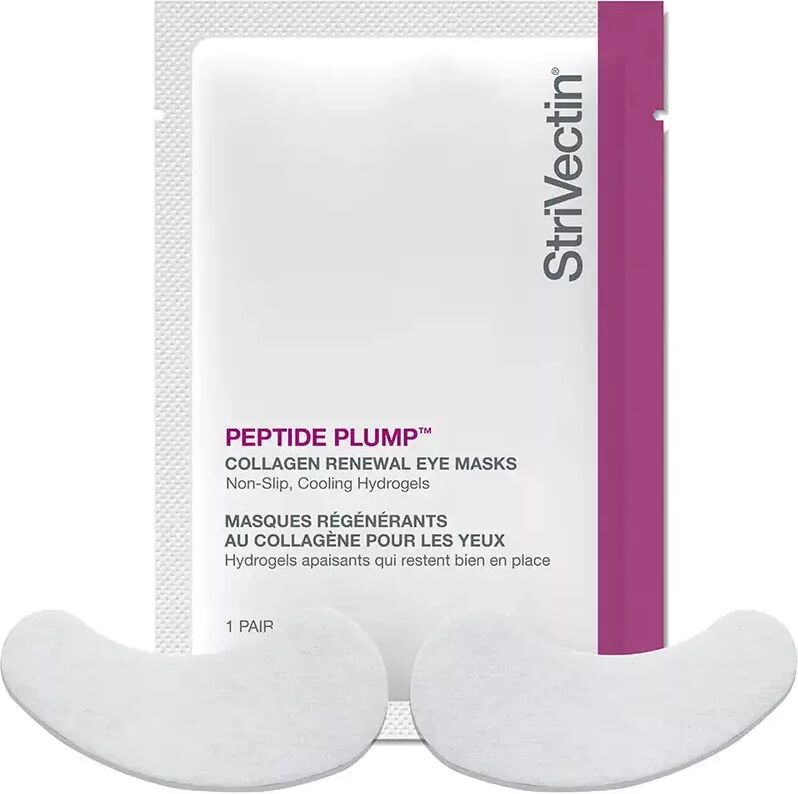
Strivectin Peptide Plump Collagen Eye Masks 6 uHealth and Beauty Masks Strivectin Peptide Plump Collagen Eye Masks 6 u What is Peptide Plump Collagen Eye Masks 6 u? StriVectin's Peptide Plump Collagen Eye Masks are hydrogel eye patches that deliver visible results in just ten minutes. The package contains six individually wrapped masks, perfect for carrying in your makeup bag. Benefits Its refreshing gel adheres well to the eye area and has a non-slip design, so it stays put while it works. When removed, the eyes look more rested: bags are less pronounced, dark circles are less noticeable, and fine lines and crow's feet are less visible. The formula combines microalgae peptides and the brand's exclusive Alpha-3 Peptide with marine algae ferment, niacinamide, and collagen amino acids. According to StriVectin, 95% of users saw a more youthful appearance around their eyes after just one use, and 96% noticed less visible bags. The formula is perfume-free and paraben-free. Who is it for? For those who want a quick "good face" effect, for example after sleeping little, or extra care for the eye contour several times a week. How to apply Peptide Plump Collagen Eye Masks 6 units? Clean the area and remove the protective film. Place the side of the gel on the skin under the eye, with the narrow part towards the tear duct. Leave it on for 10 minutes . Remove it carefully and dispose of it. Use them three times a week or whenever you need them. Product Use For external use around the eyes. Avoid direct contact with the eye and do not reuse the patches.25,33 £*Shipping: 3,99 £Secure redirect to the provider



-
What is a peptide bond, peptide chain, peptide group, di-, tri-, and polypeptide? Can you please explain this briefly and simply? Thank you.
A peptide bond is a chemical bond that forms between the carboxyl group of one amino acid and the amino group of another amino acid. When multiple amino acids are linked together by peptide bonds, they form a peptide chain. A peptide group refers to a group of amino acids linked together by peptide bonds. A dipeptide is a chain of two amino acids, a tripeptide has three amino acids, and a polypeptide is a chain of many amino acids linked together. These chains of amino acids are the building blocks of proteins. **
-
How does hydrolysis occur during peptide cleavage?
Hydrolysis occurs during peptide cleavage when a water molecule is used to break the bond between the carboxyl group of one amino acid and the amino group of another. This process involves the addition of a water molecule to the peptide bond, resulting in the separation of the two amino acids. The water molecule donates a hydrogen ion to one amino acid and a hydroxide ion to the other, causing the bond to break and the peptide to be cleaved. This hydrolysis reaction is catalyzed by enzymes called proteases, which facilitate the cleavage of peptides in biological systems. **
-
What is the stability of peptide bonds?
Peptide bonds are relatively stable under normal physiological conditions. They are formed through a condensation reaction between the carboxyl group of one amino acid and the amino group of another, resulting in the release of a water molecule. This covalent bond is strong and resistant to hydrolysis, making it stable in the presence of water. However, under extreme conditions such as high temperature or strong acids or bases, peptide bonds can be hydrolyzed, leading to the breakdown of the peptide chain. **
-
Why are peptide bonds not freely rotatable?
Peptide bonds are not freely rotatable because of the partial double bond character that arises from resonance in the peptide bond. This restricts the rotation around the bond and locks the peptide backbone into a planar structure. The resonance forms a rigid, flat structure that allows for the formation of the alpha helix and beta sheet secondary structures in proteins. This rigidity is essential for maintaining the specific three-dimensional shape and function of proteins. **


How does one go from DNA to peptide?
The process of going from DNA to peptide involves several steps. First, the DNA sequence is transcribed into messenger RNA (mRNA) by the enzyme RNA polymerase. The mRNA is then translated by ribosomes, which read the mRNA sequence in groups of three nucleotides called codons. Each codon corresponds to a specific amino acid, which is the building block of a peptide. As the ribosome reads the mRNA, it links together the corresponding amino acids to form a peptide chain. This chain of amino acids folds into a specific three-dimensional structure to form a functional peptide. **
How can one recognize mesomerically stabilized peptide bonds?
Mesomerically stabilized peptide bonds can be recognized by the presence of resonance structures in the peptide bond. This is typically observed when the peptide bond is part of a conjugated system, such as in the case of proline or in the presence of aromatic amino acids like phenylalanine or tyrosine. The presence of resonance structures indicates that the electrons in the peptide bond are delocalized, leading to increased stability. Additionally, mesomerically stabilized peptide bonds may exhibit altered reactivity compared to non-stabilized peptide bonds, making them important in the study of protein structure and function. **
Top-Angebote
Products related to Sensilis-Peptide-Eye-Liss:
-
Sensilis Peptide [Reti-V] Regenerating Night Care for Sensitive Skin 50mLA facial serum for wrinkles and signs of ageing. Revitalize sensitive skin overnight with Peptide [Reti-V]. Formulated with 0.5% Bakuchiol, collagen-boosting Skinarch Peptide, and turmeric extract, it reduces inflammation, smooths wrinkles, and activates cell renewal — vegan-friendly and dermatologist-tested.48,96 £*Shipping: 6,94 £Secure redirect to the provider
-
What are peptide bonds?
Peptide bonds are covalent bonds that link amino acids together in a protein chain. They are formed through a condensation reaction between the carboxyl group of one amino acid and the amino group of another amino acid, resulting in the release of a water molecule. Peptide bonds are crucial for maintaining the structure and function of proteins, as they determine the sequence of amino acids in a protein chain. **
-
What is correct: peptide bond?
A peptide bond is a covalent bond that forms between the carboxyl group of one amino acid and the amino group of another amino acid during protein synthesis. This bond is formed through a condensation reaction, where a molecule of water is removed. The resulting bond is a strong and stable linkage that holds the amino acids together in a protein chain. Therefore, the correct term is "peptide bond" to describe this specific type of covalent bond between amino acids. **
-
What is a peptide bond, peptide chain, peptide group, di-, tri-, and polypeptide? Can you please explain this briefly and simply? Thank you.
A peptide bond is a chemical bond that forms between the carboxyl group of one amino acid and the amino group of another amino acid. When multiple amino acids are linked together by peptide bonds, they form a peptide chain. A peptide group refers to a group of amino acids linked together by peptide bonds. A dipeptide is a chain of two amino acids, a tripeptide has three amino acids, and a polypeptide is a chain of many amino acids linked together. These chains of amino acids are the building blocks of proteins. **
-
How does hydrolysis occur during peptide cleavage?
Hydrolysis occurs during peptide cleavage when a water molecule is used to break the bond between the carboxyl group of one amino acid and the amino group of another. This process involves the addition of a water molecule to the peptide bond, resulting in the separation of the two amino acids. The water molecule donates a hydrogen ion to one amino acid and a hydroxide ion to the other, causing the bond to break and the peptide to be cleaved. This hydrolysis reaction is catalyzed by enzymes called proteases, which facilitate the cleavage of peptides in biological systems. **
Similar search terms for Sensilis-Peptide-Eye-Liss
-
Strivectin Peptide Plump Collagen Eye Masks 6 uHealth and Beauty Masks Strivectin Peptide Plump Collagen Eye Masks 6 u What is Peptide Plump Collagen Eye Masks 6 u? StriVectin's Peptide Plump Collagen Eye Masks are hydrogel eye patches that deliver visible results in just ten minutes. The package contains six individually wrapped masks, perfect for carrying in your makeup bag. Benefits Its refreshing gel adheres well to the eye area and has a non-slip design, so it stays put while it works. When removed, the eyes look more rested: bags are less pronounced, dark circles are less noticeable, and fine lines and crow's feet are less visible. The formula combines microalgae peptides and the brand's exclusive Alpha-3 Peptide with marine algae ferment, niacinamide, and collagen amino acids. According to StriVectin, 95% of users saw a more youthful appearance around their eyes after just one use, and 96% noticed less visible bags. The formula is perfume-free and paraben-free. Who is it for? For those who want a quick "good face" effect, for example after sleeping little, or extra care for the eye contour several times a week. How to apply Peptide Plump Collagen Eye Masks 6 units? Clean the area and remove the protective film. Place the side of the gel on the skin under the eye, with the narrow part towards the tear duct. Leave it on for 10 minutes . Remove it carefully and dispose of it. Use them three times a week or whenever you need them. Product Use For external use around the eyes. Avoid direct contact with the eye and do not reuse the patches.25,33 £*Shipping: 3,99 £Secure redirect to the provider
-
Farmstay 24K Gold & Peptide Solution eye mask 60 pcFarmstay 24K Gold & Peptide Solution, 60 pc, Eye Masks for Women, The Farmstay 24K Gold & Peptide eye mask takes perfect care of the eye area, improving the quality of the skin and restoring its vitality. Characteristics: restores skin firmness and elasticity soothes the eye area gives skin the necessary hydration smooths wrinkles and reduces fine lines How to use: Remove the eye patches from their packaging and place them on clean skin under the eyes. Allow to act for the time indicated on the packaging. Remove and gently pat any mask residue into the skin.12,84 £*Shipping: 3,99 £Secure redirect to the provider
-
Ondo Beauty 36.5 Peptide Complex & Bakuchiol Nourishing Eye Cream 15Health and Beauty Creams Ondo Beauty 36.5 Peptide Complex & Bakuchiol Nourishing Eye Cream 15 What is Peptide Complex & Bakuchiol Nourishing Eye Cream 15 ml? Peptide Complex & Bakuchiol is the nourishing eye cream from Ondo Beauty 36.5, the Korean-inspired brand created by MiiN in Barcelona. It has a rich texture that melts on contact with the skin and absorbs without leaving a greasy residue, designed for the thinnest and most delicate area of the face. Benefits It combines a peptide complex derived from astragalus root and rice ferment, which provides amino acids for a more radiant eye contour, with bakuchiol , a plant-based active ingredient used as a gentle alternative to retinol to improve elasticity and smooth fine lines without irritation. Ceramide NP strengthens the skin barrier, shea butter and jojoba oil prevent moisture loss, and three types of hyaluronic acid hydrate at different levels. Vitamins B5, C, and E complete the formula. The eye contour feels plump, more supple, and ready for makeup. It is a vegan product. Who is it for? Suitable for all skin types, especially if the eye contour area feels dry, dehydrated, or has lost elasticity, and for those seeking a gentler alternative to retinol for sensitive skin. How to apply Peptide Complex & Bakuchiol Nourishing Eye Cream 15 ml? Take a small amount after the serum. Place it on the orbital bone and spread it around the contour with your ring finger, using gentle tapping motions. Apply it morning and night. Product Use For external use only, for adults. Avoid direct contact with eyes and discontinue use if irritation occurs. Store in a cool, dry place, away from direct sunlight.26,44 £*Shipping: 3,99 £Secure redirect to the provider
-
What is the stability of peptide bonds?
Peptide bonds are relatively stable under normal physiological conditions. They are formed through a condensation reaction between the carboxyl group of one amino acid and the amino group of another, resulting in the release of a water molecule. This covalent bond is strong and resistant to hydrolysis, making it stable in the presence of water. However, under extreme conditions such as high temperature or strong acids or bases, peptide bonds can be hydrolyzed, leading to the breakdown of the peptide chain. **
-
Why are peptide bonds not freely rotatable?
Peptide bonds are not freely rotatable because of the partial double bond character that arises from resonance in the peptide bond. This restricts the rotation around the bond and locks the peptide backbone into a planar structure. The resonance forms a rigid, flat structure that allows for the formation of the alpha helix and beta sheet secondary structures in proteins. This rigidity is essential for maintaining the specific three-dimensional shape and function of proteins. **
-
How does one go from DNA to peptide?
The process of going from DNA to peptide involves several steps. First, the DNA sequence is transcribed into messenger RNA (mRNA) by the enzyme RNA polymerase. The mRNA is then translated by ribosomes, which read the mRNA sequence in groups of three nucleotides called codons. Each codon corresponds to a specific amino acid, which is the building block of a peptide. As the ribosome reads the mRNA, it links together the corresponding amino acids to form a peptide chain. This chain of amino acids folds into a specific three-dimensional structure to form a functional peptide. **
-
How can one recognize mesomerically stabilized peptide bonds?
Mesomerically stabilized peptide bonds can be recognized by the presence of resonance structures in the peptide bond. This is typically observed when the peptide bond is part of a conjugated system, such as in the case of proline or in the presence of aromatic amino acids like phenylalanine or tyrosine. The presence of resonance structures indicates that the electrons in the peptide bond are delocalized, leading to increased stability. Additionally, mesomerically stabilized peptide bonds may exhibit altered reactivity compared to non-stabilized peptide bonds, making them important in the study of protein structure and function. **
* All prices are inclusive of VAT and, if applicable, plus shipping costs. The offer information is based on the details provided by the respective shop and is updated through automated processes. Real-time updates do not occur, so deviations can occur in individual cases. ** Note: Parts of this content were created by AI.